The three Ms of nutrition.
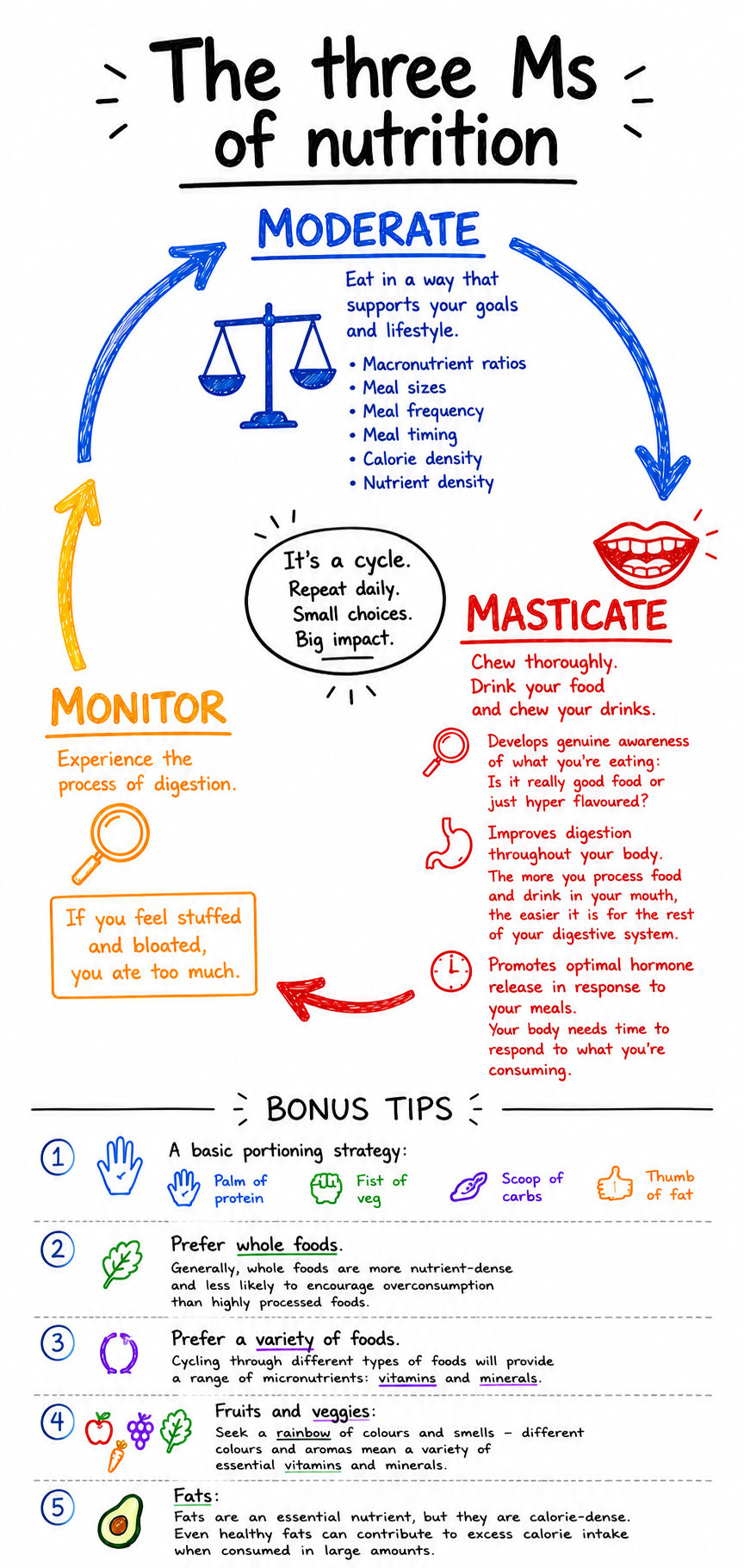
Nutrition doesn’t need to be complicated.
Instead of obsessing over diets, supplements, and conflicting advice, start with three simple principles:
Moderate. Masticate. Monitor.
These three habits can help you develop a healthier and more sustainable relationship with food.
1. Moderate
Nutrition doesn’t happen in isolation.
Your eating habits are influenced by your mental, physical, and social wellbeing. Stress, sleep, activity levels, relationships, and environment all affect the choices you make around food.
Moderation is about eating in a way that supports your goals and lifestyle.
Things you can moderate include:
Macronutrient ratios
Meal sizes
Meal frequency
Meal timing
Calorie density
Nutrient density
The goal isn’t perfection. The goal is finding an approach you can sustain over time.
2. Masticate
Mastication means chewing.
Before food reaches your stomach, digestion begins in your mouth.
A useful phrase to remember is:
“Drink your food and chew your drinks.”
Chew food thoroughly until it becomes liquid before swallowing, and take time to taste and experience your drinks rather than consuming them mindlessly.
This can help you:
Develop greater awareness of what you’re eating
Improve the mechanical breakdown of food before digestion
Give your body more time to respond to a meal
Many people eat so quickly that they barely experience their food. Slowing down can completely change your relationship with eating.
3. Monitor
Pay attention to what happens after you eat.
Your body constantly provides feedback.
Notice:
Hunger
Fullness
Energy levels
Cravings
Digestion
Bloating
Comfort and discomfort
For example, if you regularly feel stuffed and bloated after meals, that’s useful information. You may be eating too much, eating too quickly, or eating foods that don’t agree with you.
Nutrition is not just about what goes into your body. It’s also about how your body responds.
Bonus Tips
A Simple Portioning Strategy
For most meals, start with:
A palm of protein
A fist of vegetables
A scoop of carbohydrates
A thumb of fats
Adjust based on your size, activity levels, and goals.
Prefer Whole Foods
Generally, whole foods are more nutrient-dense and less likely to encourage overconsumption than highly processed foods.
Prefer Variety
Different foods contain different nutrients.
Cycling through a variety of foods can help provide a broader range of vitamins, minerals, and other beneficial compounds.
Eat the Rainbow
Different colours and aromas in fruits and vegetables often reflect different plant compounds and nutrients.
Aim for a variety of colours across the week.
Respect Fats
Fats are an essential nutrient, but they are also calorie-dense.
Even nutritious fats can contribute to excess calorie intake when consumed in large amounts.
Final Thoughts
Nutrition doesn’t need to be perfect.
Start with the basics:
Moderate. Masticate. Monitor.
Repeat daily.
Small choices. Big impact.